
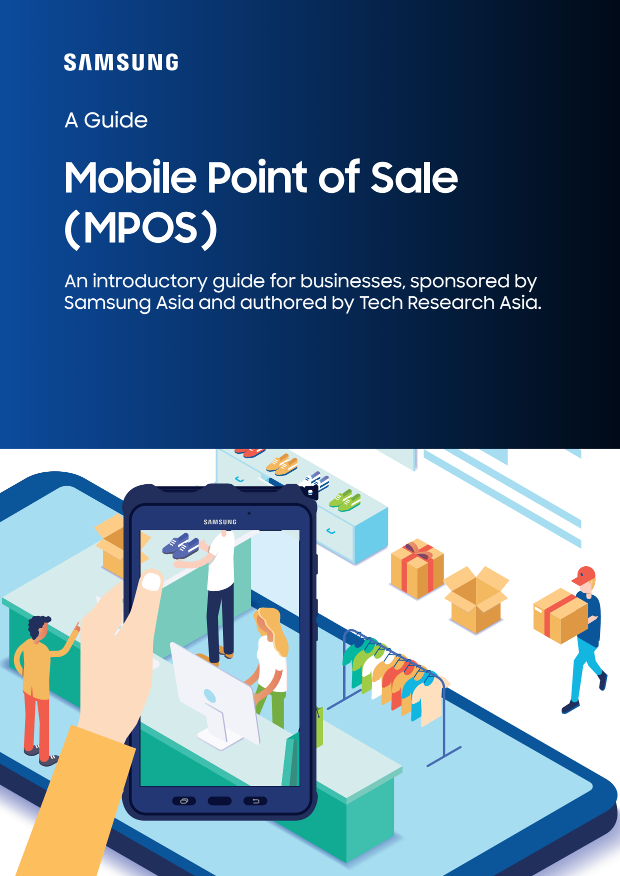

If you run a shop, a cafe or a field service business in Asia Pacific, you have probably noticed how many ways there are to take a card payment now. You can use a smartphone with a card reader, a tablet on the counter, or a terminal supplied by your bank. Choosing a mobile point of sale setup sounds simple until you start comparing providers, fees, devices and the rules that come with handling card data.
Mobile Point of Sale (MPOS): A Guide is written for business owners and managers who are new to MPOS solutions and want a clear picture before they commit. It was authored by analyst firm Tech Research Asia and sponsored by Samsung Asia. It draws on a regional survey of businesses in eight countries to show how organisations are using mobile POS today and what results they report.
What a mobile point of sale system involves, and what it replaces
Older POS setups were bulky and expensive, built on PC hardware with a stack of peripherals and a slow merchant approval process behind them. The guide explains what changed. It covers the handful of components that make up a typical MPOS solution, how they work together to complete a transaction, and why they are often sourced from different manufacturers. It also clears up a common confusion: the difference between a mobile POS and mobile payments such as digital wallets.
The material is grounded in real situations. Three use cases follow a small cafe moving off a cash register, a self-employed electrician who wants to quote and get paid on the spot, and a start-up fashion label taking its online range into pop-up stores and markets. You'll see where a tablet makes sense, where a smartphone add-on is more flexible, and why a payment terminal that can't run business software may hold you back. The guide also flags a practical catch for businesses tied into a bank contract.
Comparing MPOS vendors in a crowded, fragmented market
The MPOS market is full of new entrants, and the guide is frank that many providers won't last. To help you make sense of it, it groups the market into five core types of MPOS provider, from banks and card acquirers to specialist device makers and integrated disruptors. For each, it explains what it typically offers and where it tends to fall short, whether that's transaction fees, set-up effort, device longevity or limited functionality outside payments.
You'll also see which device attributes surveyed businesses rank most highly, how preferences for smartphones and tablets compare, and how buyers feel about devices that do more than one job. The guide closes with a vendor assessment checklist: the questions to put to any provider about stability, security, devices, payment processing and ongoing costs before you sign.
PCI DSS compliance, EMV certification and regional differences
Taking card payments brings obligations. The guide gives a plain explanation of PCI DSS compliance, including how requirements scale with transaction volume and who carries the risk of fines. It then walks through the three levels of EMV certification, covering hardware, kernel and brand approval, so you can tell what "certified" actually means when a vendor says it.
Regional context runs throughout. Banking habits, smartphone use, payment systems and finance legislation differ sharply across Asia Pacific, which means an MPOS solution that suits one country may not suit another. The survey results show how use cases, preferred device features and buying plans vary from market to market.
After reading, you'll be able to:
- Explain the parts of an MPOS solution and how a transaction flows through them
- Match a device approach to your type of business
- Judge providers against a practical set of questions
- Understand the compliance terms you'll meet in vendor conversations
- Know which benefits other businesses have been able to measure
The guide finishes with a view of where the market is heading, including expectations for fees, vendor consolidation and the next generation of rugged, multi-purpose devices.
Get the full MPOS guide
Download the guide to get the survey findings on adoption, benefits and device refresh plans, the breakdown of provider types, the PCI DSS and EMV explainers, three worked use cases and the full vendor checklist. It's a short, readable starting point for anyone weighing up mobile POS in Asia Pacific.