
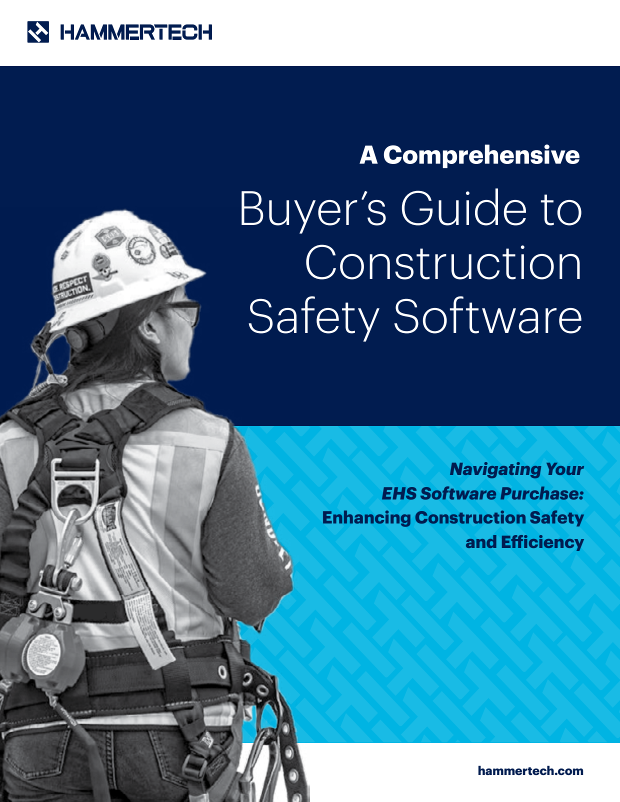

Most construction firms already know that paper sign-in sheets, emailed JHAs and spreadsheet training logs can't keep up with their project load. The harder question is what should replace them. Construction safety software varies widely in what it covers, how vendors price it, and how much work it takes to roll out across your sites and trade partners. Choose badly and you pay for a tool crews ignore. Choose without a solid business case and the purchase may never clear the budget meeting.
HammerTech produced this buyer's guide for the people on both sides of that decision. Safety leaders need a platform their field teams will actually use. CFOs and finance leaders need confidence that the spend will pay back. The guide speaks to each, explaining what an EHS platform should do on a construction site, how to compare vendors fairly, and how to win executive approval for the investment.
What to look for in construction safety software
Not every EHS tool is built for the way general contractors work. The guide breaks the evaluation into the areas that matter most on a jobsite: subcontractor management, worker orientations and training, daily site operations such as permits and pre-task plans, and the reporting that turns field activity into usable safety data. For each area you'll find the benefits to expect, the capabilities worth asking about, and the questions to put to vendors during a demo.
Subcontractor safety management gets particular attention, and for good reason. Your EHS results depend heavily on trade partners, so the guide looks at how a platform can bring them into processes like hazard analyses, safety data sheets, worker enrollment and issue resolution, rather than leaving your team to chase paperwork. It also covers the platform-level questions that are easy to overlook until after you've signed: cloud access from any device, integration with project management and accounting systems, and how easily forms and workflows can change as your processes do.
Understanding EHS software pricing and ROI before you sign
Pricing is where many buyers get caught out. EHS platforms are usually sold on subscription, but the final number can hinge on far more than seat count. The guide outlines the nine factors SaaS vendors typically use to build a quote, so you can see what drives your price and compare offers on equal terms. It also shows where hidden fees tend to appear and what to check in a vendor's terms before you commit.
On the return side, you'll get a practical set of factors for estimating EHS software ROI for your own business, from insurance and claims costs to administrative time, paper handling and audit trails that hold up in a dispute. There's guidance, too, on what a sound implementation and training plan should include, which helps you judge whether a vendor's rollout support matches what your teams will need.
A safety management software checklist and business case framework
Beyond explanation, the guide gives you tools to use in your own evaluation:
- A safety management software checklist organized around leading, midstream and lagging indicators, with space to score each vendor side by side
- A framework for building the business case, matched to whatever your leadership cares about most, whether that's cost, compliance visibility or employee engagement
- Project spotlights and first-hand comments from safety directors at contractors including DPR Construction and DAVIS Construction
The checklist is designed so you can rate how well each platform performs, not just whether a feature appears on a spec sheet. That distinction tends to separate tools that look similar in a sales presentation from those that hold up on a live project. The business case section helps you anticipate the objections executives are likely to raise and assemble support from operations and project leaders before you present.
The result is a resource you can bring straight into vendor meetings and budget discussions, instead of piecing criteria together from scattered product pages.
Get the full construction EHS platform buyer's guide
Download the guide to get the feature-by-feature evaluation questions, the pricing factors and hidden-fee checks, the ROI considerations, the scoring checklist and the step-by-step business case framework, along with real examples from contractors who have already made the switch. Fill out the form to receive your copy and walk into your next vendor review prepared.