

If your business still runs on a phone system bought years ago, you know the routine. Upgrades need a late night and an IT person, every new hire or office move means calling the carrier, and the features you actually want seem to live somewhere else. Moving to a cloud phone system promises to fix that, but the decision raises fair questions. What exactly are you buying? Which features matter for a five-person start-up compared with a busy call center? And what happens to the PBX you already paid for?
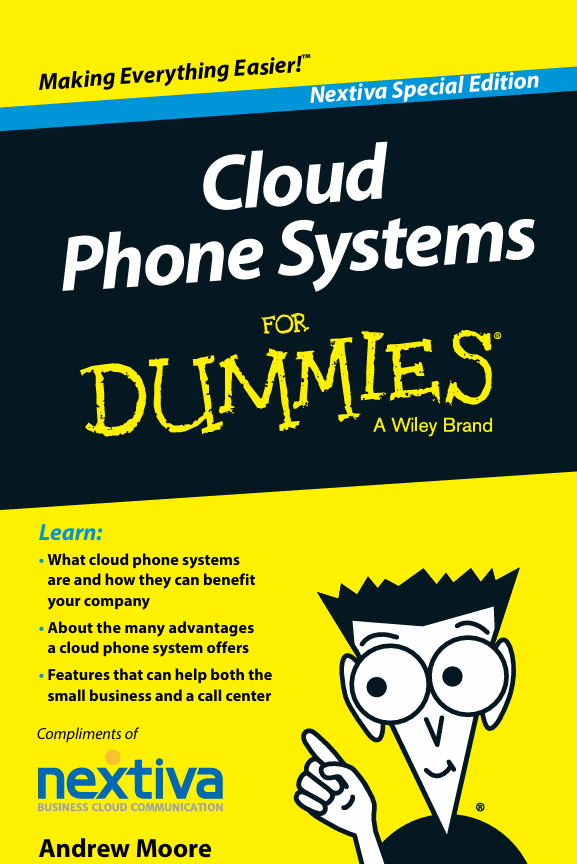
Cloud Phone Systems For Dummies, Nextiva Special Edition answers those questions in plain language. Written by Andrew Moore and published by Wiley in the familiar For Dummies format, it is a short, readable primer on how hosted phone service works and what it can do for companies of any size.
What a cloud phone system changes for your business
The book starts with the basics. It explains how VoIP carries calls over the same network that handles your email and video, and what "the cloud" means when someone else runs the servers. From there it covers the move from owning phone software to subscribing to it, and why that shift affects budgets, maintenance and growth.
You'll come away understanding the practical case for hosted phone service. Updates arrive without downtime on your side. Distributed data centers make outages less likely. Adding users becomes a billing change rather than a hardware project. The book also covers integration with CRM software, showing how call data can keep customer records current without salespeople typing it in by hand.
Business phone features for small offices, remote teams and enterprises
A large part of the book explains the features buyers ask about most, in terms of what each one does day to day. Expect clear explanations of topics such as:
- SIP trunking, for connecting an existing PBX to VoIP instead of replacing it
- Local and toll-free numbers that give you a presence in new cities without opening an office
- Voicemail, faxing and conferencing handled through software and email
- Tools that keep virtual workers reachable wherever they are
The examples are concrete and easy to picture. One shows how a car dealership's parts department can pick up a waiting call from any phone without tying up anyone's line. Another explains how a company based in one city can advertise a local number in a new market and route those calls back home.
Call center software in the cloud, explained for managers
Call centers get their own chapter, because their needs go well beyond an office phone. Moore covers how calls reach the right agent, how supervisors can monitor and coach during live calls, and how scheduling, reporting and call recording support quality control. He also explains how cloud communications let agents work from anywhere, so you can extend coverage across time zones or bring on seasonal staff without buying new equipment.
If you run both an office and a support team, the book makes the case for using one phone service across the whole business, with call data gathered in one place for reporting.
Get the free guide to hosted business telephony
It suits owners, operations leads and IT managers who need to get up to speed quickly. Use it as a briefing before you talk to providers, or hand it to colleagues who sign off on the budget. Learning the vocabulary alone (ACD, BLF, ANI, DNIS) will make vendor conversations easier and help you ask sharper questions.
Download the free Nextiva Special Edition to get all five chapters: an introduction to VoIP and the cloud, the advantages of hosted service, the everyday business features, the call center toolkit, and a closing list of ten reasons companies move their phone service to the cloud.