Effective time and attendance management is critical for controlling labor costs, ensuring compliance, and improving workforce productivity, yet many organizations still rely on manual or fragmented systems that introduce errors, inefficiencies, and employee frustration. The Excelforce Time and Attendance Buyer's Guide provides a clear, practical roadmap for organizations looking to modernize their timekeeping processes, guiding stakeholders from assessing current-state challenges and defining goals to evaluating vendors and implementing a best-fit automated solution. The guide demonstrates how automation delivers measurable value by reducing payroll errors, minimizing unplanned overtime, improving labor visibility, strengthening compliance, and freeing administrative resources for higher-value work. With real-time data, configurable workflows, mobile access, and employee self-service, organizations can improve accuracy, engagement, and decision-making. Ultimately, the guide underscores the importance of choosing a long-term partner and highlights Excelforce's integrated HCM platform as a scalable, secure, and cost-effective solution that unifies time and attendance, payroll, HR, and talent management to support sustained business success.
Labor costs typically consume 30–70 % of revenue, making payroll accuracy - and timeliness - mission-critical for businesses. Errors lead not only to employee dissatisfaction (nearly half consider leaving after two payroll mistakes) but also to compliance penalties (about 40 % of small firms pay an average of US $845 annually in IRS fines).
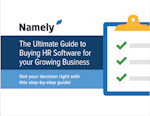
This e-Book serves as a clear, step-by-step roadmap for mid-sized companies ready to adopt an HR software platform - starting by assessing internal readiness, then defining requirements, selecting vendors, and asking the right evaluation questions. It distinguishes between core HR systems (handling HRIS, payroll, benefits) and talent-management modules (recruiting, performance, learning) and emphasizes that growing organizations typically benefit from a single, modern, integrated cloud-based platform. The guide highlights key criteria for readiness - size, growth trajectory, tech-savviness, staff capacity, budget - and provides a worksheet to map future needs. In vendor selection it recommends building cross-functional teams, deciding between unified vs best-of-breed solutions, and systematically evaluating features, support, and deployment models. Ultimately the message: don't just buy software - choose a partner aligned to your business and culture for the long term.
The HR Trends & Priorities Guide for 2026 highlights a pivotal year of transformation as HR leaders confront rapid technological disruption, rising workforce expectations and increasing organizational complexity. AI and automation are shifting from experimental tools to essential drivers of efficiency—streamlining administrative workloads, improving accuracy and enabling HR to focus on strategy, talent and employee experience. With nearly all surveyed HR and finance leaders planning to invest in new HR and payroll technology, 2026 marks a decisive push toward modern, unified systems that eliminate data silos and support real-time decision-making. At the same time, organizations are prioritizing employee experience, upskilling and retention to address widening skills gaps and changing workforce demands, while rethinking performance management to create more continuous, equitable and data-informed processes. Despite economic and labor-market pressures, leaders express strong optimism rooted in HR’s expanding strategic role and its growing integration with IT, analytics and enterprise strategy. Ultimately, the guide positions 2026 as a defining moment in which HR teams that embrace digital ecosystems, leverage AI responsibly and invest in talent development will be best positioned to drive organizational performance and shape the future of work.