
Why accounts payable keeps growing finance teams stuck
If your company is adding vendors, entering new countries or hiring quickly, accounts payable is usually where the strain shows first. Invoices pile up, approvals stall in inboxes, and someone on your team is still matching purchase orders by hand. The month-end close drags, and leadership waits on numbers you can't produce faster. AP rarely brings money in, so it tends to get the least attention and the oldest tools, even though it sits right next to your company's cash.
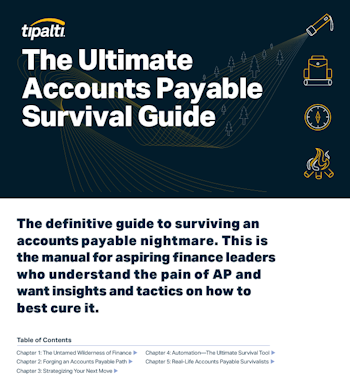
The Ultimate Accounts Payable Survival Guide, produced by Tipalti, is written for finance leaders and aspiring finance leaders who already feel that pain and want practical ways to fix it. It treats AP as a problem you can solve rather than a cost you have to tolerate.
What you'll learn about AP automation and redesigning the payables process
The guide starts with an honest look at why AP gets a bad reputation inside most organizations. It covers the manual work, the exposure to fraud, the errors that cost money and create legal risk, and the way a slow payables process weakens your visibility into company performance. If you need to explain to your CFO or CEO why AP deserves investment, this section gives you the language.
From there it shifts to strategy. You'll see the outcomes modern finance teams focus on when they rebuild their payables workflow, from paying suppliers on time to closing the books faster and getting real control over corporate spend. The guide also addresses the human side of change: how to win executive support, document your processes, and move your AP staff from transaction processing toward more advisory work.
Automation gets its own chapter. You'll understand what changes for your team, your executives and your suppliers once invoice processing and payments stop depending on manual effort, and why cloud-based reporting matters when managers need answers outside office hours.
Two parts make the guide especially practical:
- The FUSE method, a four-part framework for evaluating AP technology partners so you can compare options on more than a feature list
- A survival checklist of danger signs across areas such as global payments, multi-entity management, PO matching, tax compliance and financial controls, so you can spot where your own process is most exposed
How three growing companies took control of their invoice processing
Advice is easier to trust when you can see it applied. The final chapter profiles three real companies in health and wellness, computer software, and logistics. Each faced a recognizable mix of problems: rapid international growth, rising vendor counts, new currencies and jurisdictions, and financial processes that hadn't kept up.
For each company, the guide lays out the warning signs they were dealing with, what changed after they automated their AP workflow, and the measurable result. You'll see how they handled approvals, tax compliance, fraud controls and ERP integration with systems like NetSuite and Sage Intacct. You'll also see how they scaled without adding AP headcount. If you're building a business case, these stories give you concrete examples to point to.
Each case study is paired with a short survival tip that distills the lesson into something you can apply to your own team.
Download the AP survival guide and checklist
Most finance teams know their payables process is slowing them down. Fewer have a clear picture of where the biggest risks sit, what a better setup should look like, or how to judge the vendors pitching them. This guide gives you that picture in a format you can read in one sitting and share with your leadership team.
Download the full guide to get the FUSE evaluation framework, the complete accounts payable danger-sign checklist, the strategic outcomes to aim for, and three detailed case studies showing what automation changed for growing companies. Use it to diagnose your current process, prepare for vendor conversations, and make the case for change with confidence.